Bounce House and Water Slide Rentals: Easy Booking, Zero Stress
Throwing a great party should feel fun, not like planning a construction project. The right rental partner turns the moving parts into a simple plan you can trust. I have spent years coordinating birthday parties, school field days, church festivals, and neighborhood block events, and I have learned that two things separate a smooth day from a scramble at 9 a.m.: clear preparation and a trusted party rental company that knows the details. When you want bounce house rentals or water slide rentals, reliability beats hype every time.
This guide distills what works in the field. It covers how to choose inflatables for your space, what clean inflatable rentals actually look like behind the scenes, what delivery windows mean in practice, how to handle power and water, and how to book fast without drama. You will also see how table and chair rentals and other add‑ons simplify setup so you can focus on the guest list and the cake.
What zero‑stress really looks like on party day
Picture this: your event starts at 2 p.m. The crew arrives at 10 a.m., checks access points, lays down tarps, stakes the inflatable correctly, wipes high‑touch surfaces with a disinfectant that does not bleach colors, and inflates the unit by 10:45. By 11:15 they have verified power draw with a plug‑in meter, placed a safety mat at the entrance, and taped down the last cord cover. You sign a damage release and get a quick demo on safety rules and blower shutoff. The crew leaves, and the equipment hums along until the first guests arrive.
That sequence is not luck. Good event rental services design their routes and gear for on‑time party rentals, then back it up with spare blowers, repair kits, and extra stakes in every truck. Behind a 30‑foot water slide that runs all afternoon without drama sits thoughtful prep: dry‑run inspections, blower sizing charts, standard operating procedures for wind and thunder, and a tight communication plan. You should expect that level of professionalism from any trusted party rental company.
Choosing the right inflatable for your space and crowd
Sizing matters more than themes or colors. A small residential backyard might comfortably fit a 13 by 13 bounce house with a footprint trusted party rental company that extends to 17 by 17 when you include blower clearance and tie‑downs. A dual lane water slide can eat up 35 to 40 feet of length when you include the splash zone and safe fall clearance. Measure your useable area fence to fence, then subtract 5 to 6 feet on each side for stakes, movement around the unit, and hose management for water slides.
Capacity is just as important. Many standard bounce houses list 6 to 8 kids at a time, but that assumes similar ages and supervised rotation. If your guest list spans toddlers to teens, mix units by age band or choose a combo inflatable with a slide that naturally regulates flow. Teen groups love tall slides. Younger kids prefer lower platforms and open viewing for parents. For an elementary school carnival, planning for about one inflatable activity per 20 to 25 kids keeps lines tolerable.
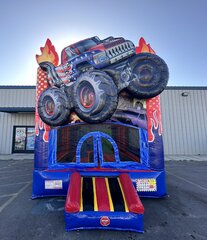
Themes can be the cherry on top. Pirate, princess, jungle, or neutral primary colors all work, and clean inflatable rentals should arrive bright, dry, and free of scuffs or tape residue. If brand‑new aesthetics matter for photos, ask for current pictures of the actual unit you are renting and the last time the vinyl was deep cleaned. Good operators keep a service log per unit that details cleanings, seam checks, and blower maintenance.
Safety is not a sticker on the side
The visible safety rules are only the tip of the iceberg. Ask how the company stakes or weights units. In grass, 18‑inch steel stakes at a 45‑degree angle, driven flush, are standard for most units. In asphalt or on a rooftop, water barrels, concrete ballast, or anchored tie‑downs rated for lateral loads are a must. Never accept a setup that ties to a fence or a vehicle bumper. Professionals carry load‑rated ratchet straps, proper ballast, and a backup plan when the soil is too rocky to stake.
Wind thresholds matter. Most inflatables should come down at sustained winds over 15 to 20 mph or gusts over 25 mph, depending on the manufacturer. This is not negotiable. I have been the unpopular person who deflated a gorgeous slide when flags started snapping and trees bent, and yes, the kids were disappointed for ten minutes. They were much happier back under the tent with shaved ice instead of at urgent care. Sticking to wind ratings is one of the clearest signs you are dealing with reliable party rentals, not corner cutting.
Cleanliness is the other non‑negotiable. A trusted party rental company sanitizes contact surfaces after each pickup and again during setup. They use products compatible with PVC vinyl that sanitize without degrading the material or leaving it slick. If you have a child with a contact allergy, ask for the product Safety Data Sheet. Good teams are proud of their cleaning protocols and will show you their kit without hesitation.
Power, water, and ground protection: the boring details that prevent chaos
Every blower needs power, and big slides often need two blowers. A standard 1 to 1.5 horsepower blower draws 8 to 12 amps at startup, then settles around 7 to 9 amps. You want dedicated 20‑amp circuits, not a shared outlet running a fridge, a DJ booth, and a coffee brewer. If your outlets are more than 75 feet from the setup area, ask for heavy‑gauge extension cords. Thin orange cords get hot and drop voltage. A good team carries 12‑gauge cords and a voltage checker.
For water slide rentals, pressure and drainage make or break the day. The slide usually requires a standard hose connection with moderate pressure. The bigger question is where the water goes. The splash zone drains fast. If the yard slopes toward the patio or back door, you want a drainage plan. A short run of plastic sheeting or sandbags can redirect flow. In some neighborhoods, sending chlorinated water into storm drains is restricted. If the company uses a recirculating pump to conserve water, ask how often they swap the water or filter debris during the party.
Protecting the ground saves you a headache on Monday. Tarp underlays keep grass from turning to mud and help contain the inevitable grass clippings that cling to socks and knees. Click here! On concrete, soft mats at entry points reduce slips. If you are setting up over artificial turf, check the manufacturer’s heat warnings. Blowers can push warm air into a sealed inflatable, and dark vinyl over artificial turf on a 95‑degree day can create a hot zone. Shade tents help, or choose lighter colors.
The booking moment: fast, clear, and confirmed
When you want easy party rental booking, clarity beats clever websites. You should be able to see live availability by date, not just a gallery. You should receive an itemized quote that includes delivery, setup, teardown, taxes, and any after‑hours fees. Many operators ask for a deposit, typically 20 to 40 percent, with the balance due before or on delivery. That is standard. What matters is the strength of the confirmation and the policy for weather reschedule.
Here is the short path I use when I am booking on a deadline.
- Confirm date, address, surface type, and setup window. Ask for delivery at least three hours before guests arrive if the event is private, earlier for public events.
- Share exact measurements and photos of the setup area, plus gate widths and any stairs.
- Choose units and add‑ons. If you have 30 kids, a single 13 by 13 is not enough. Pair it with a small slide or a game.
- Verify power and water. Identify outlets and hose connections on the property map.
- Lock the quote, read the contract, pay the deposit, and save the contact for day‑of communication.
If you run into friction at any step, pick up the phone. The best event rental services staff their lines with people who know the gear and the routes, not just a call center reading from a script. They can steer you away from a unit that will be too tall for your oaks or suggest an all in one party rentals package that includes tables, chairs, and a tent for less than piecemeal pricing.
Working with real delivery windows
No one likes vague “8 a.m. To 1 p.m.” windows when the party starts at noon. Ask for a narrower window and a courtesy text when the crew is en route. Route planning is half art, half math. A team that aims to be onsite by mid‑morning for an afternoon event shows good habits. If you live at the end of a gated cul‑de‑sac or in a complex with height restrictions for box trucks, tell them early. Nothing burns time like a truck stuck at a gate waiting on a code.
I often request setup the day before for morning events. Many operators will offer discounted overnight holds if weather is calm and the site is secure. For public venues like parks, however, you might need onsite staff or a security deposit. Park permits sometimes ban staking, which means the company must bring water barrels. That affects the truck layout and the time needed to load in. Expect transparent add‑on pricing when there are extra logistics.
Last‑minute needs without the panic
Life happens. A birthday kid changes their mind at 48 hours because suddenly every friend “needs” a water slide. Or your original vendor ghosts you and you are scrambling for last minute party rentals. A nimble operator can pull this off if you help them quickly. Share nonnegotiables like your power situation and yard photos. Be flexible on themes and models. The difference between a dry combo and a small slide with a basketball hoop rarely shows in photos, and both feel special when they are clean, tall, and new‑looking.
There is a reasonable limit. If a thunderstorm system parks over the region, you might see a cluster of reschedules into your date. An honest company will tell you what is possible and what is not. I would rather hear “we can bring a 15‑foot slide at 10 a.m.” than a soft promise on a 22‑footer that arrives late. Reliability beats size in real time. That is the heart of reliable party rentals.
Packages that actually save time and money
Party rental packages are supposed to reduce decisions, not lock you into gear you do not need. The good ones bundle a medium inflatable, table and chair rentals, and a 10 by 20 tent with sidewalls for shade or drizzle. For a backyard party of 25 to 35 people, a package that includes 4 round tables, 32 chairs, the inflatable, and a small Bluetooth speaker often lands in a cost band that is 10 to 20 percent lower than a la carte.
The value grows with delivery efficiency. One truck, one crew, one window to manage. I have seen planners save an entire hour of setup just by letting the inflatables team place tables and chairs first, then roll in the unit, then finish with cord covers and signage. All in one party rentals do not mean you sacrifice quality. They mean you are not juggling three vendors in a driveway designed for two cars.
Cleanliness and maintenance behind the scenes
You can see the shine when a unit is fresh, but what happens in the warehouse matters more. Look for racks that keep vinyl off the ground, climate‑controlled storage to slow down mildew, and a wash bay with proper drains. After a water slide runs all day, the seams trap fine grit. If it sits wet, the mildew message will show up a week later. Pros dry the unit thoroughly with air movers, wipe seams, and inspect transition points at steps and landings where small tears start.
Blower maintenance is just as critical. A fouled blower pulls dirty air and can spray dust onto the vinyl. Shops that tag blowers with service dates and use inline filters care about your experience. They also carry spare blowers so if a motor fails at 1 p.m., your party does not. This is what clean inflatable rentals looks like in practice, not just on a flyer.
Site challenges and smart workarounds
Not every yard is party‑ready. Narrow side gates, steep grades, sprinkler heads, and overhead lines create obstacles. A 36‑inch side gate is the de facto minimum for most commercial‑grade inflatables, though some can squeeze through 32 inches with care. If you have steps, count them and send photos. Dollies can manage a few stairs, but not a long, uneven flight. In tight spaces, a front‑yard setup works fine if the slope is tame and there is a clear line of sight for supervision.
Artificial turf and pavers change the staking plan. Most trusted operators carry non‑penetrating anchors and pads that spread load without scuffing surfaces. Expect a small surcharge for ballast because water barrels require transport, fill time, and careful placement. The tradeoff is a safe setup that respects your landscaping and your HOA rules.
Apartments and community centers often require certificates of insurance naming the venue as an additional insured. Ask for that early. A serious vendor can provide it within a day, sometimes same day, and they will already know the rough cost. That paperwork is routine in event rental services that work with schools and municipalities. It signals you are in good hands.
The power of supervision and simple rules
Even the best gear needs human eyes. A single adult who takes the job seriously would rather remind kids to wait a turn than deal with a sprained ankle. Rotation by age band works. So does a timekeeper on the slide. Post simple rules in large print: no flips, no climbing netting, no food inside, shoes off, no water on dry units. A calm, friendly monitor does more for safety than a paragraph of fine print.
If you are running a fundraiser or a school field day, pay for at least one staff monitor from the rental company for the busiest attraction. They know the pinch points and can shut down a blower in seconds if wind picks up. That might feel like an extra line item, but it is cheap insurance that keeps the line moving and the adults free to manage everything else.
Weather calls with confidence, not emotion
Rain by itself is usually an inconvenience, not a showstopper. Light rain on a warm day makes a water slide even more fun. Lightning changes the story. Most operators will not set up if lightning is within a certain radius or if radar shows an active cell moving in. That caution protects your guests and their team standing in an open yard with metal stakes and electric blowers. Ask for the weather policy in writing. It should outline reschedule windows, deposit treatment, and the cutoffs for making the call.
Cold weather and inflatables do not mix well either. Vinyl stiffens below roughly 45 degrees and becomes more prone to cracking at stress points. I have done winter parties with compact indoor inflatables inside a gym, but outdoor setups need a temperature floor. A trustworthy vendor will advise you away from a risky plan even if it costs them a sale that weekend.
Transparent pricing and what counts as a fair deal
You are paying for more than vinyl. You are buying route planning, trained staff, insurance, fuel, maintenance, and a responsive hotline. Price shopping only by the banner rate per unit can mislead you. Watch for hidden travel fees, fuel surcharges, or cleaning fees that appear after the fact. A fair quote lists delivery, setup, teardown, taxes, and any optional add‑ons like overnight holds or attendants.
Cheapest is rarely best. I once saw a drop‑off price that beat a competitor by thirty dollars. The unit arrived late, dirty, and with a blower that tripped a breaker. We spent an hour resetting power and searching for an extension cord while the party waited. The “savings” vanished with one irritated parent and a tight timeline. Reliable party rentals cost what they do because they build in contingency for the problems you never see.
Add‑ons that pull their weight: tables, chairs, shade, and power
Table and chair rentals seem mundane until you are scrambling to seat grandparents or spread out pizza boxes. Count on 6 to 8 people per 60‑inch round table or 6 per 6‑foot rectangular, with space for walking and strollers. Mix a standing cocktail table or two near the drink station to avoid crowding. For shade, a 10 by 20 tent covers two to three rounds or two banquet tables comfortably. Sidewalls help with wind, but they also trap heat on summer days, so use them strategically.
If the event includes a DJ, a cotton candy machine, or a snow cone cart, coordinate power. Many events fail here. A small inverter generator can power a speaker, but not a blower and a cotton candy machine simultaneously. Ask your rental team for a quiet generator with clean power if your circuits are far away or already spoken for. Good providers know their amperage and can design a power plan, which is part of the value of all in one party rentals.
A simple site prep checklist that avoids 90 percent of issues
- Mow and clear the setup area 24 to 48 hours before, then pick up rocks, toys, and pet waste.
- Measure gate widths, overhead clearance, and the distance to outlets and hose bibs.
- Identify sprinkler heads and turn off scheduled watering the night before.
- Reserve parking for the delivery truck and clear a path free of cars and trash bins.
- Crate pets indoors and plan supervision coverage for the first hour of the event.
That last point matters. The first hour is when rules get set and lines form. Once the rhythm is established, the day floats.
How to spot a trusted party rental company before you book
Reputation lives in more than online stars. Read comments for mentions of punctuality, cleanliness, and quick fixes when something went wrong. Ask how many events the company handles on a typical Saturday and how many trucks run. A single truck can do great work, but it has less backup if a unit fails or a route is blocked. Multi‑truck operators can swap units mid‑day, and they often carry more varied inventory.
Look for clarity on insurance and inspection. Many states require periodic inspections on commercial inflatables. If your vendor cannot clearly explain their compliance, move on. Their contract should spell out responsibility for damage, the client’s duty to supervise, and weather policies without legal fog. If they dodge simple questions about blower sizes or anchoring methods, that is a red flag.
The best companies talk you out of mistakes. I once had a client insist on a 22‑foot slide for a sloped yard ending in a retaining wall. The vendor suggested a 15‑foot slide rotated ninety degrees, plus a small foam pit to cushion the landing area. It looked terrific, fit the space, and ran for five hours without a single incident. Judgment beats inventory every time.
Bringing it all together for no stress party planning
When the rentals fit your space, power and water are squared away, delivery happens on time, and the crew leaves you with a clean, safe setup, the party runs itself. Kids need three things: something exciting to climb, a defined space to burn energy, and a parent nearby who can swap out soaking socks. Adults need shade, a chair, and a plan for ice. Everything else can be simple. Reserve your bounce house rentals or water slide rentals early if your date lands in peak season, usually late spring through early fall, and ask about weekday rates if you are flexible.
A clean, modern inflatable paired with the right table and chair rentals, a tent for comfort, and a practical power plan turns a backyard into an event. Find a partner who treats your party as a route stop to prepare for, not a gamble to squeeze in. That is the difference between juggling logistics and enjoying your guests. With reliable party rentals and a few smart steps, you get what you wanted all along: easy booking, zero stress, and a day that feels as good as it looks in photos.